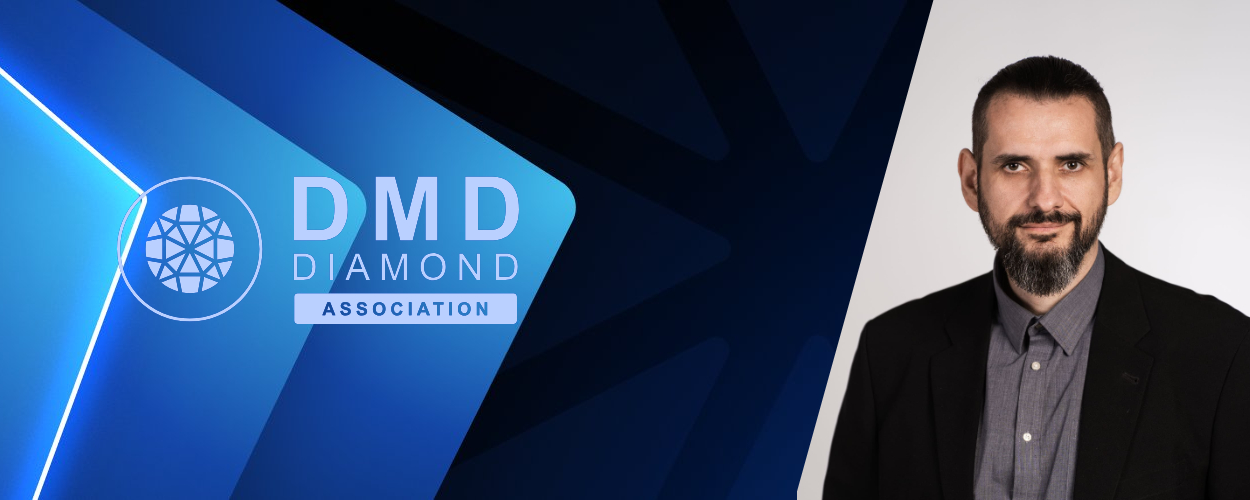


Helmut Siedl, Chairman at DMD Diamond Association, discusses how the future of Web3 is a cooperative ecosystem with multiple blockchains.
For the past decade, the blockchain industry has been obsessed with a “Highlander” narrative: There can be only one. We speak of “Ethereum Killers,” the “Solana Summer,” or the dominance of Layer-1 giants backed by billions in venture capital. We’ve treated the evolution of decentralised tech like a zero-sum war.
But after years in the trenches—from the early days of Bitcoin to the birth of the DAO—I’ve realised that the “winner-takes-all” mentality is actually the biggest bottleneck to mass adoption. The future isn’t a single dominant chain; it’s a cooperative, multi-chain ecosystem where a corporate board doesn’t dictate innovation, but rather by the mathematical elegance of the protocol itself.
The Great Compromise: The Shadow of the Trilemma
We are all familiar with the “Blockchain Trilemma.” The industry has long accepted that you must sacrifice one: Decentralisation, Security, or Scalability.
- Ethereum chose decentralisation but suffered from “the synchronicity trap”—waiting for global consensus makes it slow and expensive.
- Solana and BSC chose speed, but often at the cost of decentralisation, relying on high-end hardware and a “leader-based” system that creates single points of failure.
In a leader-based system (like PBFT or Tendermint), one node proposes a block, and the others vote. If that leader’s connection stutters, the whole network waits. It’s a hierarchy disguised as a network. This fragility is why “decentralised” networks still have outages.
The Asynchronous Revolution
At DMD Diamond, we decided to stop trying to “win” the war by being slightly faster versions of existing tech. Instead, we looked at HoneyBadger BFT (HBBFT).
HBBFT is a paradigm shift because it is asynchronous. It makes no assumptions about time. In a world where nodes are spread across the globe with varying internet speeds, waiting for a “leader” or a “clock” is a liability.
In our implementation, there is no leader. Instead of one node proposing a block, all nodes propose transactions simultaneously. The network reaches consensus when enough data fragments (via Erasure Coding) are gathered. This isn’t just a technical upgrade; it’s a philosophical one. It means the network is limited only by the throughput of the honest majority, not the latency of the farthest node.
Solving the “Dark Forest” of MEV
One of the most predatory aspects of current L1s is MEV (Maximal Extractable Value)—where validators front-run users, stealing value by reordering transactions they can see in plain text.
By integrating Threshold Encryption into our HBBFT-EVM stack, we’ve made the network “blind” until the moment of truth. While transactions themselves are never encrypted on the sender’s side, the system utilises threshold encryption for node contributions; this ensures that until the active set has enough data (contributions) to finalise a block, they remain unaware of the specific content of those contributions, thereby prioritising censorship resistance over end-to-end transaction encryption.
This levels the playing field. It moves us from a “Competitive” environment (where big players hunt retail users) to a “Cooperative” one (where the protocol ensures fairness for everyone).
Why “Community-Driven” Really Matters
The industry is increasingly dominated by corporate interests and VC-backed foundations. But history shows that quiet, community-driven projects are often the ones pioneering the tech that the “giants” later adopt.
DMD Diamond is one of the oldest projects in the space, and our transition to a system where a DAO controls the core contract logic is a testament to the power of staying power. We survived crypto winters not because we had the biggest marketing budget, but because we prioritised the “Social Consensus” of our community.
Conclusion: The Shift to Cooperation
The next era of Web3 won’t be defined by which L1 “wins.” It will be defined by how these chains interact.
By using EVM-compatible HBBFT, we aren’t trying to silo users; we are providing a secure, front-running-protected port in the storm that can communicate with any other chain.
The Trilemma is not an unbreakable law; it was a challenge waiting for a better mathematical answer. With asynchronous consensus, we are finally building blockchains that are as resilient as the communities they serve.
Helmut Siedl is the Chairman at DMD Diamond Association and has 11 years of dedicated experience in decentralised and privacy-focused technologies. He transformed DMD Diamond into a project where the DAO controls all core contract logic, and pioneered integrating Honeybadger HBBFT consensus into EVM-compatible blockchains.
Stay updated on crypto and AI by following our socials