

We spoke with Starke Finance’s Founder and CEO, Oscar Garcia Falcon, to find out how the company is bringing DeFi fund management to TradFi.
The recent wave of pro-crypto regulations in the US has placed digital assets in the spotlight, and one of the trending topics is that of real-world asset (RWA) tokenisation, which digitises and fractionalises ownership of real-world assets such as equities, bonds, and property.
As tokenisation gains traction beyond cryptocurrencies, its use cases are expanding into fields such as decentralised finance (DeFi), fund management, and institutional-grade asset structures. Starke Finance, founded by Oscar Garcia Falcon, is one of the key players dedicated to bridging traditional financial frameworks with blockchain-powered efficiency.
Built on the belief that tokenised funds will become a cornerstone of tomorrow’s financial infrastructure, Starke Finance is building compliant, auditable platforms that make digital assets truly investable. We speak to Oscar to understand how Starke Finance is helping to bridge that gap between traditional finance (TradFi) and DeFi.
Could you share what Starke Finance is about, and what makes it stand out from the crypto crowd?
Starke Finance was founded to bridge the gap between traditional finance and decentralised innovation by introducing institutional-grade structure to Web3. The company focuses on engineering products that make digital assets both investable and scalable within global financial systems. While many platforms pursue short-term yield, Starke Finance builds long-term infrastructure such as tokenised funds and staking solutions, designed for institutions that require the same level of risk control expected in traditional markets.
The firm’s approach combines the precision and compliance of Wall Street with the efficiency of Web3. Its product suite integrates compliance and auditability directly into its code. This emphasis on robust design and regulatory readiness distinguishes Starke Finance from the broader crypto landscape.
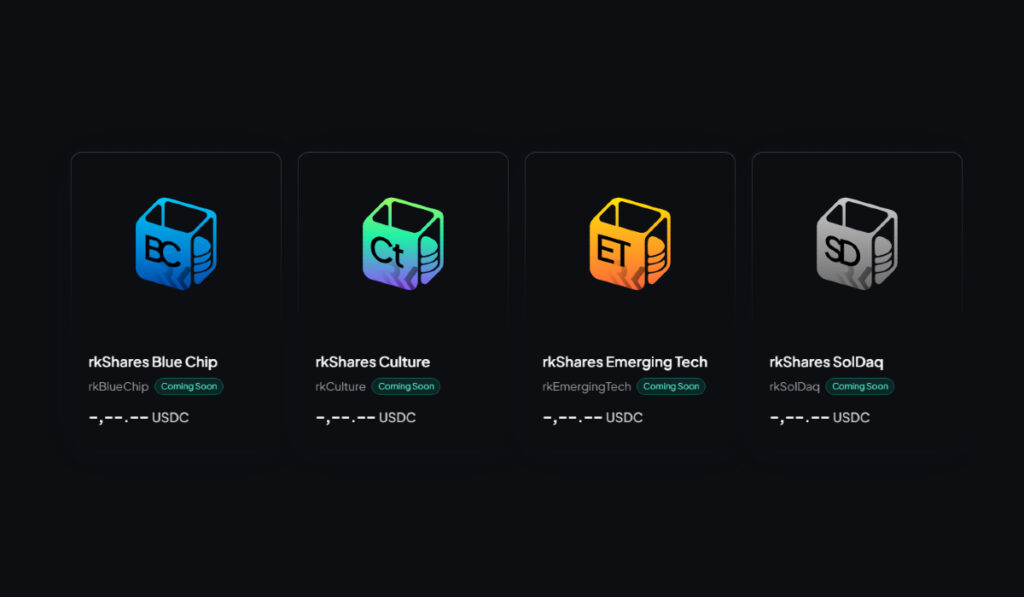
Starke Finance’s Managed Funds, including the rkShares Blue Chip Fund, focus on long-term growth. How do you keep the fund resilient and optimised amidst crypto’s volatility?
Volatility is mostly associated with native crypto assets; however, we also need to consider the tokenisation stream that is improving asset quality across the blockchain. The rkShares Blue Chip Fund will initially be human-managed with manual portfolio allocation but will later expand to include automated rebalancing capabilities. In terms of its investment strategy, rkShares Blue Chip will maintain at least 70% of its allocations in less volatile digital assets (i.e., established high-capitalisation cryptocurrencies, public and private equity, and other real-world tokenised assets), combined with a smaller allocation targeting opportunities with strong long-term value appreciation potential.
This disciplined approach ensures exposure to high-quality digital asset yield while prioritising capital protection. While investing in digital assets is considered a high-risk investment by industry standards, with a focus on risk-management fundamentals and liquidity depth, we strive to deliver consistent, risk-adjusted returns through market cycles.
Beyond performance, optimisation comes from structure. Each rkShares Fund operates as a tokenised, auditable vehicle with real-time visibility into holdings and yield strategies. This transparency, coupled with embedded compliance and automated risk controls, provides institutional and accredited investors with the governance and confidence they expect from traditional funds.
You described Starke Finance as “combining TradFi discipline with DeFi efficiency.” How do you see traditional institutions engaging with DeFi, and what advantages could this bring to their clients?
The next frontier of finance is where blockchain-native assets can flow through trusted traditional rails to unlock an entirely new standard of capital access and efficiency. This is already being demonstrated by financial powerhouses investing heavily in tokenisation as part of their operational enhancement strategies for the coming years.
At Starke Finance, our FTaaS, or Fund Tokenisation as a Service, infrastructure platform empowers institutions to manage digital assets with the same compliance, configurability, and reporting standards that they rely on to meet local regulations, while unlocking the operational efficiencies that DeFi offers.
For users, this convergence translates into tangible benefits such as 24/7 accessibility, greater transparency, and new services that are just as stable but operate with on-chain efficiency. With custodial safeguards in place, we are turning DeFi into a trusted operational layer for traditional institutions.

Will the company continue building within Solana, or are you preparing to operate across multiple blockchains?
Solana has given us the foundation to prove that institutional-grade DeFi is achievable. Our validator provides an enterprise-grade staking service with 0% commissions, setting a benchmark for reliability in on-chain infrastructure. That said, our vision has never been confined to a single ecosystem. We are always open to expanding to other blockchains where doing so strategically strengthens our product offering and institutional partnerships.
Our focus has always been on building infrastructure that bridges blockchain systems with the standards of traditional finance. As tokenisation matures, interoperability will become critical, and we intend to play a key role in that evolution by ensuring that our managed funds and treasury solutions remain secure and accessible wherever institutional capital moves.
RWA tokenisation has resurfaced as a major theme but with greater momentum. What do you think has driven this renewed interest?
The renewed momentum surrounding RWA tokenisation reflects a structural shift. Today, tokenisation has become the backbone of how financial institutions reimagine asset distribution and liquidity.
Rising interest rates have driven the search for scarcer yield-bearing instruments, while regulatory initiatives, such as the US GENIUS Act, designed to provide clearer oversight of digital assets, have given tokenised securities newfound legitimacy. What makes this cycle different is the combination of ecosystem maturity and the growing willingness of many jurisdictions to recognise an unstoppable technological trend that promises to reshape the financial system.
At Starke Finance, we see this shift as validation of what we have been building from the start = tokenised funds that connect traditional mandates with the transparency and programmability of blockchain. We are translating ecosystem maturity into practical, investable products, and our role is to ensure that tokenisation is trusted and ready to scale.
How do you see asset tokenisation aligning with TradFi strategies, and what part will Starke Finance play?
Asset tokenisation will increasingly act as a bridge until tokenised assets eventually form the backbone of most major public exchanges and financial systems, becoming the default asset archetype. As institutional investors seek new ways to optimise yield, liquidity, and diversification within established mandates, digital assets have emerged as an attractive avenue for such access.
However, this is a gradual transformation. Regulation and compliance are essential, and we must evolve together within the boundaries of what is possible, helping regulators understand this evolution while protecting investors.
Starke Finance’s role sits precisely at this intersection. By building tokenised managed funds that blend both traditional and digital finance exposures, Starke translates DeFi innovation into institutional-grade portfolios that are diversified, auditable, and aligned with fiduciary standards. Our infrastructure effectively transforms blockchain-native assets into regulated investment channels, enabling institutions to integrate tokenised strategies seamlessly within their evolving mandates.
Despite growing interest in crypto ETFs, many have yet to explore tokenisation. Why do you think that is?
The surge in institutional interest from major players such as Standard Chartered and JPMorgan Chase is evidence that traditional financial institutions are ready to explore the benefits of tokenisation. However, the lack of familiar and robust infrastructure remains a barrier to large-scale adoption. What is needed now are solutions that provide the same sense of familiarity and security institutions recognise, allowing tokenised assets to integrate seamlessly within existing operational and compliance frameworks.
At Starke Finance, we believe tokenisation is not about reinventing finance but about improving it. By combining on-chain efficiency and yield dynamics within a structure that meets institutional standards, we are doing precisely what we set out to achieve with our product suite.
For us, the key to unlocking mainstream adoption by traditional institutions lies in providing familiar tools, enabling an asset manager to build a portfolio that behaves like a fund, settles like a blockchain, and scales like globally accessible software.
Anthony Karakai recently said, “There’s still a bridge to build between DeFi and TradFi”. How is Starke Finance helping to construct that bridge?
Building the bridge between DeFi and traditional finance is central to our mission, closing the gap between how trust is built and how value moves. Traditional finance has long operated with proven governance and compliance guardrails, though often inefficiently, while DeFi has demonstrated the programmability and speed to reshape capital flows.
The challenge lies in merging these strengths to allow institutions to engage with new asset classes that behave like traditional finance products yet deliver frontier-level yield. At Starke [Finance], we see our tokenised managed funds as bringing this vision to life by combining the accessibility of DeFi with the accountability of regulated finance, giving institutions a secure and scalable way to participate in the next phase of financial evolution.