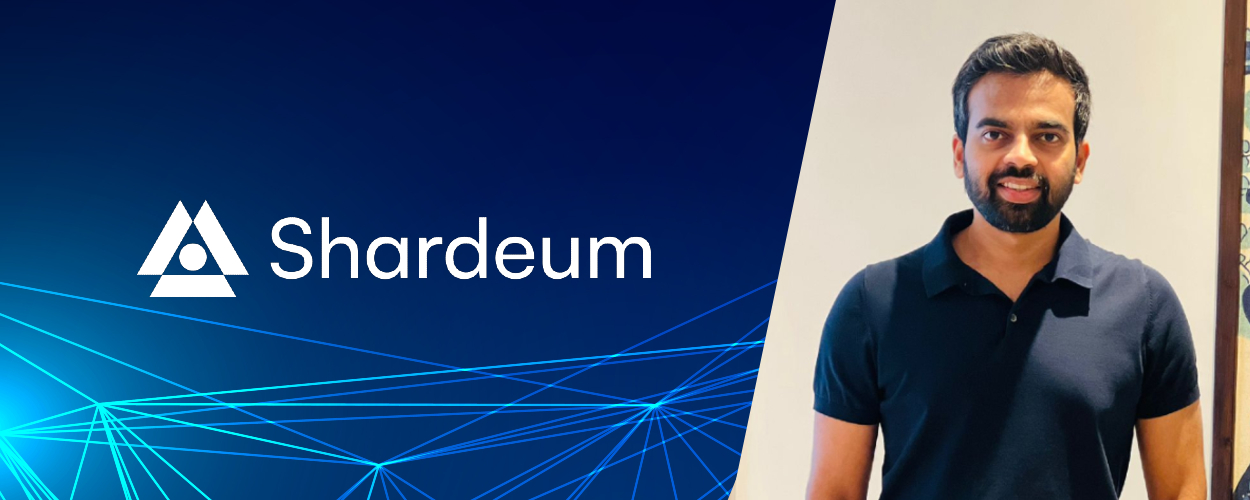


Nischal Shetty, co-founder of Shardeum and CEO of WazirX, shares how India’s digital infrastructure positions the nation to lead in on-chain systems.
On a humid afternoon in Mumbai, a street vendor selling vada pav pauses for a moment not to count change, but to scan a QR code. A college student taps her phone and walks away, the payment settling in seconds. No cash, no card machine, no friction.
This tiny, ordinary exchange is actually extraordinary. It represents a revolution India has quietly mastered: building digital systems that work flawlessly for a billion people. Today, the same forces that made UPI possible are preparing India for its next leap to become the world’s first on-chain nation.
While much of the world explores blockchain through market speculation, narrow regulatory sandboxes, or isolated pilot projects, India’s approach is fundamentally different. We do not build technology for hype cycles. We build technology to solve real problems publicly, openly, and at a population scale. This mindset is exactly why India is positioned to lead the global shift toward on-chain systems.
India’s digital transformation has already created a foundation unmatched globally. UPI processes over 10 billion monthly transactions; Aadhaar provides identity to more than 1.3 billion people; Account Aggregator enables secure, consent-based data sharing; DigiLocker acts as a trusted digital records vault, and ONDC is reshaping commerce through open networks. These systems have something in common: they are public digital goods created to benefit everyone, not just a privileged minority.
The natural next step is to extend these digital public rails with on-chain verification, transparency, and programmability. On-chain systems can provide tamper-proof audit trails, verifiable credentials, programmable trust, and interoperable infrastructure capabilities that strengthen the very foundations of governance, finance, and service delivery in a country of India’s scale.
India’s developer ecosystem amplifies this opportunity. In 2024 alone, 4.7 million new developers from India joined GitHub. The country now contributes 17% of all new Web3 developers globally. Over 85% of this talent is under 27, deeply immersed in open-source culture and comfortable with trustless, composable architectures, the exact skills needed to build robust on-chain systems. These developers are contributing to identity protocols, DeFi infrastructure, gaming economies, RWA tokenisation, and more.
Unlike many countries, India’s regulatory stance also reflects pragmatic clarity. High taxation and AML frameworks keep speculative trading under check, but the environment remains open for innovation in core blockchain infrastructure. Government bodies and state departments have already experimented with on-chain certificates, land record registries, and audit trails. These early efforts signal a broader shift: India sees the value of blockchain primarily as a tool for transparency, efficiency, and accountability, not as a speculative financial instrument.
The economic case for an on-chain nation is compelling. On-chain land records can reduce fraud and accelerate property transfers. MSMEs can access credit faster using verifiable on-chain financial histories. Students can receive tamper-proof certificates. Supply chains, carbon markets, healthcare records, and public procurement systems can all achieve new levels of trust and automation. These are precisely the kinds of real-world use cases India is known for operationalising at scale.
To fully unlock the on-chain opportunity, India will need a framework that distinguishes between speculative crypto assets and on-chain public infrastructure providers. Regulatory clarity can encourage global investors, reduce brain drain, and build confidence in India’s on-chain vision. A regulatory sandbox specifically for population-scale on-chain systems could accelerate adoption while preserving consumer protection.
If India continues building at its current pace, the next five years could see a transformation similar in impact to UPI. An on-chain identity layer could complement Aadhaar. On-chain payments could bring programmability to financial services. On-chain document verification could replace countless manual processes. Public audits could shift from retroactive checks to continuous, real-time transparency.
India’s story has never been about chasing trends. It has always been about solving large, complex problems with elegant, inclusive technology. The move to on-chain systems is not a deviation from our path; it is the natural evolution of it.
India has already shown the world how digital infrastructure can work at a population scale. Now it is poised to show how on-chain infrastructure can redefine trust, transparency, and governance for the world. India’s next revolution is coming quietly, pragmatically, and once again, built for a billion people.
Nischal Shetty is the co-founder of Shardeum and CEO of WazirX, India’s largest crypto exchange by volume. He is a well-known entrepreneur with over a decade of experience building and scaling global products out of India. A software engineer by education, he has also founded Crowdfire, a social media management product with over 20 million users in the past.
Stay updated on the crypto space by following our socials