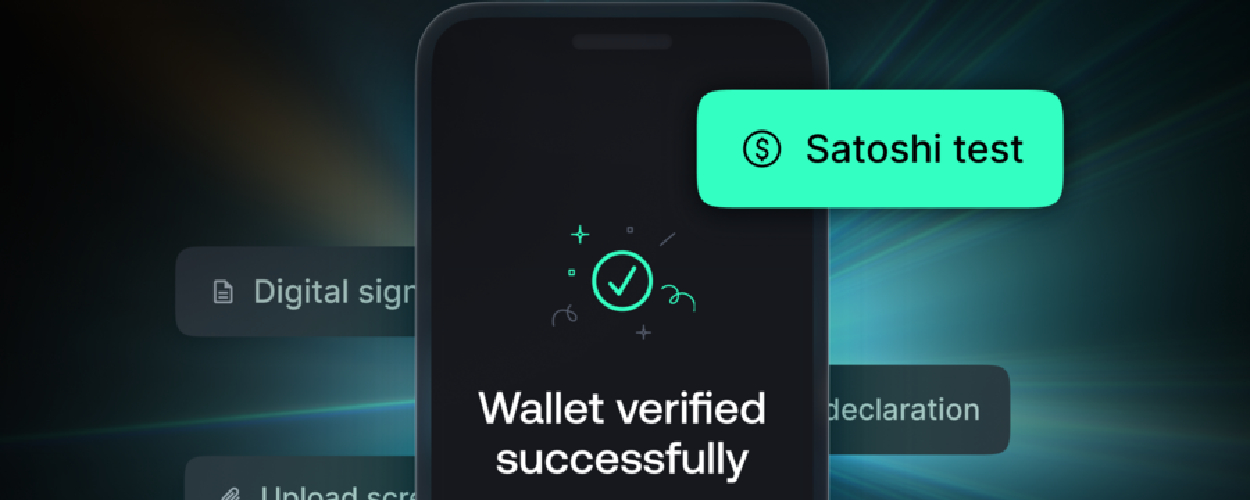


The new micro-transaction verification method completes Sumsub’s ownership proof options to support Travel Rule compliance.
Verification solutions Sumsub has announced the addition of an automated Satoshi Test to its Unhosted Wallet Verification solution.
The Satoshi Test, a micro-transaction verification, is a method used to prove ownership of unhosted wallets through a small, time-bound transaction. This update allows virtual asset service providers (VASPs) to confirm wallet ownership and manage potential risks associated with unverified wallets.
With this addition, Sumsub now supports four verification methods: Satoshi Test, Digital Signature, Self-Declaration, and Screenshots. This suite is intended to help companies align with varying regulatory expectations and risk-based policies across different jurisdictions.
The implementation comes as regulatory bodies, including the Financial Action Task Force (FATF), increase scrutiny on transactions involving unhosted wallets. According to Sumsub’s State of the Crypto Industry 2026 report, 74% of crypto firms have prioritised verification accuracy due to the operational sensitivities of compliance in peer-to-peer transfers.
Andrew Novoselsky, Chief Product Officer at Sumsub, said: “Firms now need to demonstrate that their control frameworks stand up to real scrutiny, without sacrificing conversion or scalability. That’s why we support all four commonly accepted unhosted wallet verification methods for VASPs—fully automated and embedded into transaction flows, keeping the user journey fast and intuitive.”
Users verify ownership by sending a predefined amount within a specific timeframe. Sumsub then validates the transaction and the originating wallet on-chain before the deposit or withdrawal is permitted to proceed..
Stay updated on crypto and AI by following our socials.