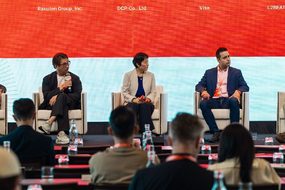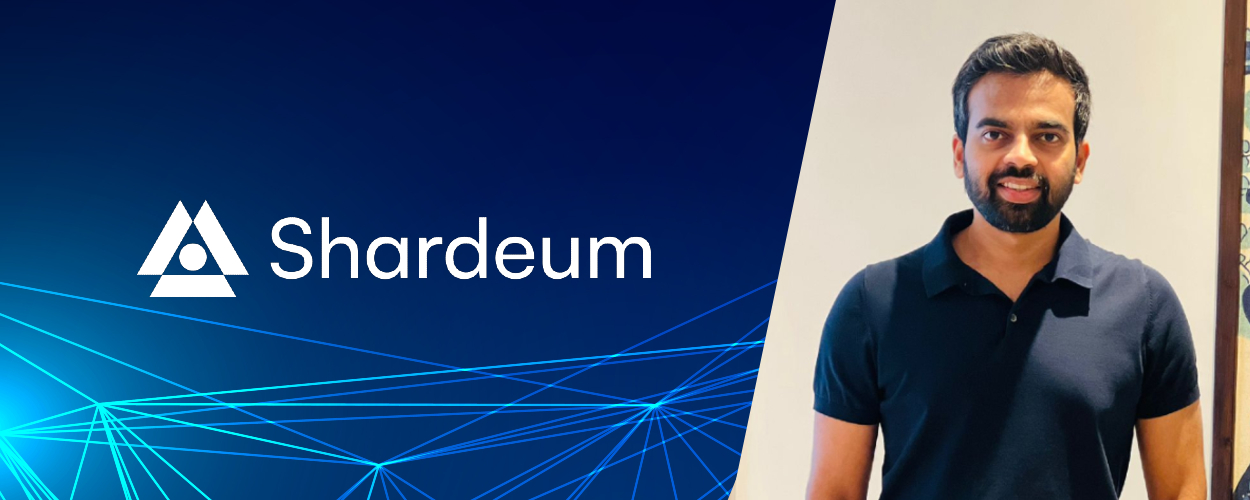


Nischal Shetty, co-founder of Shardeum and CEO of WazirX, believes that AI and blockchain are complementary rather than competing technologies.
Among tech investors, AI and blockchain get framed as a cage match: two hype cycles fighting over the same money, the same headlines, the same hard-to-hire engineers. Pick one, you’re told, the technology that thinks or the technology that keeps the books. It’s a clean story, and wrong. The two aren’t competing for the same territory. They’re covering each other’s blind spots, and the more interesting infrastructure of the next few years is being built where they overlap.
Each is hopeless at what the other does well. AI is staggeringly capable and largely unaccountable. The big models are trained behind closed doors, and when one hands you an answer, you have no way to check which model actually ran, whether it used your data as promised, or whether the math was done right. You take it on faith. Blockchain has the opposite personality: open, recorded, hard to tamper with, but it can’t think and chokes on anything computationally heavy. One side has a brain and no paper trail. The other has an impeccable paper trail and no brain.
So let each cover for the other. AI supplies the thinking; blockchain supplies the receipts. This isn’t pitch-deck theory; it’s already running in production.
Start with raw compute. Training and inference burn through processing power, bottlenecked by tight GPU supply and a few giant cloud providers. The workaround is taking shape: networks that pool idle GPUs from data centres, gaming machines, and decommissioned mining rigs into open markets anyone can rent from. Render’s usage has more than quadrupled in a year. Akash, a decentralised GPU cloud, signed over 43,000 leases in a single quarter and pushed roughly 120 billion tokens of inference in a month, at prices that badly undercut the big clouds. It doesn’t break the grip three companies hold on compute, but it’s a real counterweight.
Then there’s proof. A handful of projects can now verify an AI’s work cryptographically, proving a specific model ran on specific inputs and gave a specific output, not just claiming it. Some lean on restaked capital for security; others use zero-knowledge proofs to vouch for what happened inside an inference. It sounds abstract until you picture AI reading a scan, scoring a loan, or drafting a contract. There, the gap between “trust us” and “here’s the proof” stops being academic.
Agents are where it gets tangible. New wallet standards and secure hardware enclaves let an AI agent hold funds and spend them under tight rules, with keys scoped to say “swap only this token, cap it here, never go past it.” Wire that to the protocols agents use to talk to each other, and you get the start of a machine economy: software doing real economic work, settling in stablecoins, every move logged and fenced in. It works only because the agent is a clerk with a spending limit, not a signer holding every key, and the ledger enforces the limit.
And data: instead of a few platforms hoovering up everyone’s information and answering to no one, newer structures let people license their own, with provable rights and traceable usage.
The thread through all of it is trust. The hard problem of the AI era was never raw ability; the models keep getting smarter on their own. It’s accountability. Once these systems act on their own and move money, “trust the company that built it” stops being good enough. You want guarantees you can check: what ran, what it touched, what it did. That’s the job blockchain is quietly auditioning for, the layer that lets capable AI loose without asking everyone to take it on faith.
So the fight was never AI versus blockchain. It’s closed, company-owned AI against AI that’s open, auditable, and partly owned by its users, and blockchain is what makes that second version possible.
Nobody serious is putting everything on-chain; the workable designs keep heavy computation off-chain and record only the proofs and permissions that matter. The chains are still slow and pricey in places, models can still be fooled by adversarial inputs, and the sector throws off enormous speculative noise unrelated to any of this. But the direction holds.
The people who win the next stretch won’t be on Team AI or Team Blockchain. They’ll be the ones building intelligence that can show its work: one technology to decide, another to prove the decision sound. Put them together, and you get software you can trust to act on its own. That’s not two technologies at war. It’s two halves of the same thing, finally finding each other.
Nischal Shetty is the co-founder of Shardeum and CEO of WazirX, India’s largest crypto exchange by volume. He is a well-known entrepreneur with over a decade of experience building and scaling global products out of India. A software engineer by education, he has also founded Crowdfire, a social media management product with over 20 million users in the past.
Stay updated on crypto and AI by following our socials