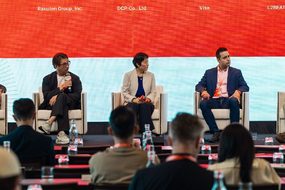


Omar Rahim, CEO and Founder of Arena Two, explains why today’s sports model leaves most fans behind and how Web3 can rebuild fandom through measurable participation and direct athlete–fan connections.
I’ve watched football in three very different rooms: a packed stadium, a private box, and a living room where the only crowd noise came from the TV.
The stadium experience is easy to monetise. Tickets, hospitality, on-site sponsors – it’s a straightforward business model because the fan is physically present and thus measurable. The living-room version is harder to price, even though it’s where most fandom actually happens. The match is on. A fan is in a group chat, posting highlights, ordering a jersey, debating tactics, and keeping the conversation going long after the game ends. They fuel the modern sports economy from the outside. Yet, structurally, they remain spectators in every sense that matters.
This disconnect is now a central flaw in sports economics.
Multiple industry studies underline that digital-first engagement is the norm, and in-person attendance is the exception. Ex Machina Group points to research indicating that over 80% of fans may never visit a stadium, so most fan relationships now happen through digital channels. Capgemini’s research similarly found that 69% of fans prefer to watch sports outside the venue, with even higher figures among Gen Z and Millennials. So why does the industry still orbit the stadium?
The Broken Incentive Loop
The funding model explains it. An athlete’s career is primarily shaped by the demands of clubs, leagues, broadcasters, and corporate sponsors. Fans, as a collective, have shockingly little direct influence.
This breeds a culture of caution. Athletes play it safe, avoiding controversy to keep stakeholders happy. Teams promote bland, sponsor-friendly narratives. And fans — the people who show up every weekend in feeds, comments, purchases, and watch time — remain a statistic.
Traditional loyalty programs rarely fix this. They offer generic rewards for narrow actions, missing the full picture of what a fan truly contributes. The real problem is measurement. A fan’s year-round passion is scattered across Instagram, X, streaming apps, and online stores. It’s fragmented, hard to prove, and easy to fake. To most teams, that dedicated fan is indistinguishable from someone who just tuned in.
Even the broader media environment reflects this shift. Deloitte reports that younger audiences have a more diverse set of favourite sports content; they devour highlights, documentaries, and athlete-driven social content. Sports is now competing with every interactive platform that rewards users for their attention.
The result is a fundamental misalignment. Fans create continuous value. Athletes and teams monetise through one-way channels. And the reward loop stays weak. Over time, this corrodes authenticity, because the people who fund the sports ecosystem have no real say in its direction.
A Fan Economy Built on Proof
Web3 changes this by introducing something sports has lacked at scale: verifiable participation. A blockchain-based system can record engagement in ways that are timestamped and auditable. When participation becomes provable, rewards can become rules-based.
This can take practical forms: tokenised rewards for measurable engagement, gated access tied to ongoing participation, and even revenue-sharing models based on defined actions. The core idea is powerful: contribution becomes legible.
At Arena Two, for example, we’re building models where live event participation can include voting and staking tied to teams. A share supports the team, while the rest unlocks tangible fan perks.
That visibility has a ripple effect: smarter decisions. Sport-focused Web3 platforms can generate real metrics on community strength – loyalty, engagement depth, retention – going far beyond vague “follower counts.” AInvest’s coverage of Web3-sports ecosystems shows that these measurable ecosystems are gaining traction precisely because stakeholders can finally “quantify” fan value. Incentives can be aligned for long-term growth.
The entire economic model starts to pivot. Once you can reliably track loyalty across a season, it stops being a vague “nice to have.” It becomes an input teams can actually use in sponsor negotiations, community valuation, or even structuring player contracts.
What Changes for Athletes
Perhaps the most under-discussed outcome of Web3 in sports is athlete independence.
Right now, many athletes are forced into a narrow survival strategy: seek institutional approval, protect the brand, avoid risks. The biggest upside usually comes through intermediaries.
A system that enables direct, value-based relationships with fans changes the game. It allows athletes to monetise their community’s strength transparently. It lets supporters back an athlete’s journey in ways more meaningful than buying a t-shirt or watching ads.
This also creates a new lens for “whale” investors and commercial partners. Instead of treating charisma and community as soft concepts, they become visible data. Stakeholders can track how consistently a fanbase shows up, how deeply it participates, and how it evolves. This clarity can support fairer negotiations, cutting through the fog around what an athlete truly drives.
Sports has always been about human achievement and community. When financial survival pushes athletes toward boardroom approval instead of fan excitement, the product loses something essential.
Web3 offers a repair kit. It rebuilds the incentive loop by recognising fandom as measurable participation and rewarding it transparently. It builds relationships that don’t require a stadium ticket.
And once fans experience that level of recognition in sports, they’ll expect it from every corner of the entertainment world.
Omar Rahim is the CEO and Founder of Arena Two, a platform building Web3 infrastructure for interactive sports. He focuses on the intersection of sports, blockchain, and digital fan engagement, developing models that connect athletes and teams with global communities through measurable participation and transparent incentives.
Stay updated on crypto and AI by following our socials