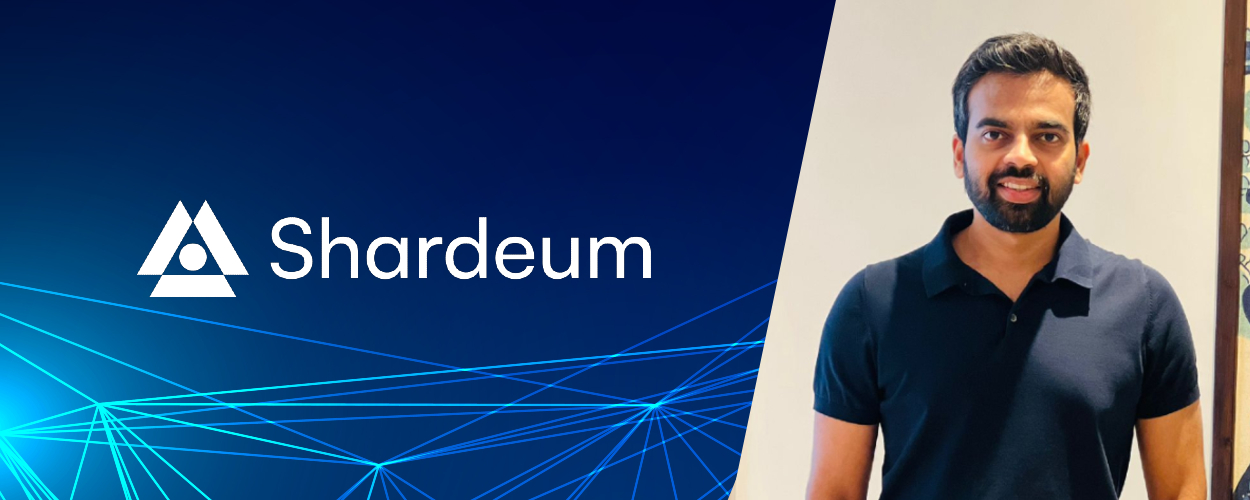


Nischal Shetty, co-founder of Shardeum and CEO of WazirX, believes that 2026 will be the year that on-chain utility will outgrow speculation.
For much of the last decade, crypto was defined by price charts. The stories that travelled fastest were about overnight gains, sudden crashes, and tokens that went viral before anyone understood what they did. That phase shaped public perception, but it never told the full story.
Quietly, beneath the speculation, blockchains have been finding real users. Across markets, blockchains are increasingly being used not to chase short-term gains, but to move money, settle transactions, access financial products, and power digital services that people rely on.
This shift has been gradual and often overlooked, but it is real. By 2026, it will become visible not just in narratives, but in sustained on-chain activity.
When we talk about growth in this industry, it helps to be precise. Real on-chain usage isn’t about hype cycles or trading volume spikes. It shows up in fundamentals: daily active addresses, recurring transactions, stablecoin flows, application revenue, and users who keep coming back because the product solves a real problem. These are the same signals that define success in any technology platform.
Speculation looks very different. It is driven by short-term narratives, leverage, and capital that enters and exits quickly. It creates noise, but not durability. And over time, markets learn to distinguish between the two.
Stablecoins make this distinction clearer than anything else. By late 2025, their global market capitalisation crossed $300 billion, with trillions of dollars moving on-chain every day, much of it tied to real economic activity like remittances, B2B settlements, and treasury management.
Even in markets with cautious regulatory environments, including India,
stablecoins are already being used quietly as financial plumbing. These transactions don’t appear on trading dashboards, but they represent real value exchange happening every day.
The same is true for real-world asset tokenisation. What began as pilot programs has turned into live markets where institutions access on-chain Treasury products, credit instruments, and yield-bearing assets. The appeal isn’t speculation; it’s efficiency, instant settlement, transparency, and liquidity that traditional systems struggle to offer. Once these advantages are experienced, it’s difficult to go back.
Developers are another powerful signal. Across India, Southeast Asia, Africa, and Europe, teams are building applications designed for scale rather than hype- payments, identity, commerce, and financial access. Layer-2 networks now process millions of transactions daily with low fees. Wallets are becoming simpler, abstracting away private keys and integrating identity and recovery mechanisms.
Many future users won’t even realise they are using blockchain technology; they will simply experience faster, cheaper, and more reliable digital services. This is what it looks like when a technology transitions from a market into infrastructure.
The challenges are still real. User experience needs to improve. Security standards must keep rising. Regulation is uneven and evolving. Network performance varies. But these are not signs of failure; they are signs of growth. Every foundational technology goes through this phase. The pressure now is forcing better design, clearer rules, and more responsible
innovation.
That’s why 2026 matters. As macro conditions stabilise and institutional participation deepens, the way crypto networks are evaluated is changing. Investors and builders are asking different questions: How many active users does this network have? What kind of activity persists during volatility? Are developers building products people rely on? These are platform questions, not trading questions.
The networks that will lead in this next phase won’t be the ones driving speculative manias. They will be the ones quietly supporting payroll, cross-border commerce, microcredit, insurance settlements, supply chains, and public records. Their success will show up in steady usage, resilient ecosystems, and relevance that survives market cycles.
This shift creates a meaningful opportunity for India. The country has already shown how digital public infrastructure can transform daily life at scale. UPI, Aadhaar, DigiLocker, and ONDC weren’t built for speculation; they were built for access, interoperability, and trust. Applying these same principles to on-chain systems could position India as a global leader once again.
A secure on-chain identity layer could improve access and reduce fraud. On-chain settlement could accelerate financial inclusion. Tamper-proof records could strengthen governance and transparency. These aren’t distant possibilities; they are practical extensions of systems India already understands.
For policymakers, this moment calls for clarity: separating speculative trading from infrastructure that delivers real economic value. For investors, it demands discipline focusing on usage, not noise. And for builders, it’s a reminder of why this technology exists in the first place.
Years from now, the industry may forget which tokens dominated social media. But it will remember when blockchains became essential infrastructure, when they stopped being discussed primarily as assets and started being relied upon as systems.
Nischal Shetty is the co-founder of Shardeum and CEO of WazirX, India’s largest crypto exchange by volume. He is a well-known entrepreneur with over a decade of experience building and scaling global products out of India. A software engineer by education, he has also founded Crowdfire, a social media management product with over 20 million users in the past.
Stay updated on crypto and AI by following our socials